Diplomat
Aligns people, partnerships, and perspectives.
Diplomats are communicators who understand people deeply and manage relationships with ease. They excel at bridging divides, creating harmony, and aligning diverse groups for collective goals.
Introduction: the leader who builds alignment
Diplomats tend to lead through relationship and influence. They are often the person who can walk into a tense room and lower the temperature — then guide the group toward a workable decision. They understand that most organizational problems are not purely technical; they are human coordination problems.
In startups, this archetype often becomes crucial during scaling: new executives, shifting incentives, and the first real internal conflicts. In larger organizations, Diplomats excel at cross-functional alignment, stakeholder management, and partnership-heavy strategies.
Their gift is coherence. Their challenge is speed and firmness.
Decision-making: stakeholder-aware and consensus-driven
Diplomats tend to evaluate decisions through the lens of people and incentives. They ask: Who will this affect? Who needs to buy in? What resistance is predictable? This can prevent costly mistakes — decisions that look good on paper but fail in reality because the organization refuses to carry them.
The risk is slow decisions. Consensus can become a trap when urgency is high. The mature Diplomat learns to create a decision process that is inclusive without being paralyzing: define who is consulted, who decides, and what timeframe is allowed.
A useful habit is to distinguish between alignment and agreement. Alignment means people will support the decision; agreement means everyone loves it. Leaders need alignment more often than agreement.
Communication: framing, negotiation, and trust
Diplomats communicate with empathy and persuasion. They are often strong at framing: translating a decision into language that different groups can accept. They negotiate tradeoffs, surface hidden concerns, and help people feel heard.
The risk is over-smoothing. Sometimes clarity must be sharp. Diplomats grow by practicing directness without aggression: naming the truth, holding standards, and being willing to disappoint people respectfully.
A practical rule: be soft on people, hard on reality.
Strengths: coalition-building and durable partnerships
Diplomats shine when success depends on many stakeholders: boards, executives, cross-functional teams, enterprise customers, regulators, partners. They are often the leaders who can keep complex systems coordinated.
They also tend to be excellent conflict navigators. Instead of avoiding tension, the best Diplomats metabolize it — turning disagreement into information and then into a decision.
In leadership terms, Diplomats increase the organization’s capacity for coordination.
Blind spots: avoidance, over-compromise, and crisis tempo
The Diplomat’s shadow side is avoidance of confrontation. When a leader tries to keep everyone comfortable, hard truths stay unspoken. Over time, that creates silent misalignment and political drift.
Another risk is over-compromise: trading away strategic clarity in exchange for short-term peace. Teams can end up with decisions that satisfy everyone a little and serve no one well.
In crises, Diplomats can struggle with urgency. The fix is to pre-commit to principles and decision rights so speed doesn’t require improvising firmness under pressure.
Under stress: when everyone wants something different
In stressful moments, Diplomats can become the organization’s negotiator — but stress can also trigger an unhelpful instinct to keep everyone happy. In reality, crises often require tradeoffs that disappoint someone.
The mature Diplomat responds by becoming more explicit: name the constraints, name the tradeoff, and explain why the decision serves the mission. When the leader is clear, stakeholders may still disagree — but they are less likely to distrust.
Under stress, diplomacy is not softness. It’s the ability to deliver hard truths without destroying relationships.
A practical influence playbook
Diplomats often succeed through craft. A useful playbook is:
- •Map stakeholders: what do they want, fear, and need?
- •Find shared wins: where interests overlap
- •Name the non-negotiables: what cannot be traded
- •Offer clean tradeoffs: what you will give for what
- •Close the loop: document the decision and next steps
This makes influence repeatable. Diplomats don’t just persuade; they build alignment that survives pressure.
Growth plan: decisive diplomacy
For Diplomats, growth often means practicing firmness and tempo while keeping empathy.
A practical 30/60/90 focus:
- •30 days: define decision rights for recurring areas (product, hiring, budget). Reduce negotiation overhead.
- •60 days: practice direct feedback weekly (one high-standard conversation you would normally soften).
- •90 days: build crisis muscle: run a scenario exercise (major outage, key customer loss) and rehearse decisive communication.
The strongest Diplomats keep relationships intact and make the hard calls.
Leadership Profile
Decision Style
Consensus-driven, thoughtful, stakeholder-aware.
Communication
Diplomatic, relational, persuasive.
Energy Profile
Calm, grounded, steady.
Key Strengths
- Strong persuasion
- High emotional intelligence
- Great at alignment
- Conflict navigation
- Clear communication
Growth Areas
- May avoid confrontation
- Appeal-to-all may slow decisions
- Can compromise too much
- Struggles under urgent pressure
- Risk-averse in crises
Reference Leader
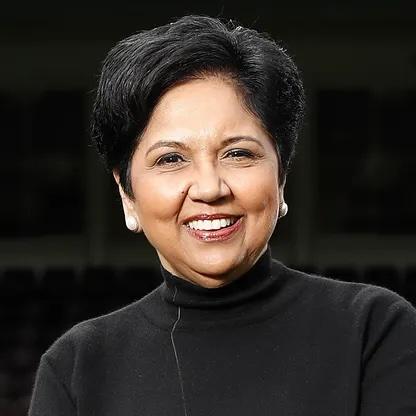
Indra Nooyi
PepsiCo
Expert in stakeholder alignment, communication, and diplomacy.
Take the assessment to see how your profile compares to Indra Nooyi's leadership style, with personalized insights on what to borrow and what to adapt.
Discover your connectionWhat You'll Discover
Your personalized results go far beyond this profile page. Here's what the 15-minute assessment unlocks:
Radar Profile
Your 12-dimension leadership fingerprint compared to the archetype ideal.
Gap Analysis
Where you exceed and fall short of your archetype, with specific action items.
Archetype Spectrum
How you rank across all 8 archetypes — not just your primary match.
AI Growth Paths
Personalized growth narratives generated for your unique profile.
Development Roadmap
Numbered priorities with concrete next steps tied to your biggest gaps.
Leader Connection
Deep comparison between your profile and the reference leader's style.
Discover your archetype
Take the free assessment and find out which leadership archetype matches your DNA.
Begin AssessmentExplore other archetypes
Visionary
Sees the future before others do.
Operator
Turns vision into predictable, reliable results.
Nurturer
Builds trust, loyalty, and culture at scale.
Architect
Builds systems that scale and endure.
Disruptor
Breaks patterns and reshapes industries.
Innovator
Turns curiosity into breakthrough solutions.
Builder
Creates scalable growth engines.